

My First Experience Shooting 4x5 Film
My first experience shooting a 4x5 camera came with a few lessons and areas to grow in. It was quite a fun challenge, however!

Shooting 4x5 Film
My latest challenge…
BACKGROUND
I’ve owned an early 20th century Speed Graphic since 2017…however, it’s only been until May of 2020 that I’ve finally exposed some Portra 160 with it. My results weren’t bad per se—if anything, at least I know the camera works and I am able to sell it in order to upgrade to a better 4x5 later. I’ll explain why further down.
Speed Graphic + Zeiss Tessar 13,5cm 1:4,5
Kodak Portra 160
THE EXPERIENCE
This camera smells old. Like that dusty thrift store kind of old. The box it sits in is rusting around the edges. But thankfully, everything seems to still be intact. The focus rails are smooth to glide the lens down, the lens isn’t sticky at any aperture, the bellows don’t seem to be leaking any light. I think it’s pretty solid for the $250 that I paid for it. The only issue I have with it is it’s lens. Apparently none of the optics are coated so flare control, micro-contrast, and color rendition suffer. And it’s pretty obvious. The image, while somewhat sharp, has a bit of a glow, softness, and harsh vignette to it (which I’m not totally particular to). I much prefer a clean image with micro-contrast and pop all across the glass. It’s an early 20th century press camera with a Zeiss lens that I can’t find much info on anywhere…so, that tells me that it’s nothing that was ever sought after—even with the Zeiss name.
I AM NOT PERFECT
I can’t get ahead of myself when discussing older gear because I am sure I’ve only scratched 5% of what my issues with this first-time-shooting-4x5 are. Maybe I have issues with some of my film holders and light leakage, maybe I have poor quality ground glass for the focus screen, maybe the Zeiss lens is in fact a great lens (however, I feel pretty confident it’s just subpar). At the end of the day, however, this camera was intended for speed and efficiency for journalists and news outlets.
The film I was using was an older box of Portra 160 that I had purchased in 2017 and it has endured a few moves across states, spending time in and out of multiple refrigerators, etc. The first time I opened the box, I actually dropped the naked film onto a dusty basement floor (of course it was in the darkest corner I could find). So, there may be a lot of factors at play here.
RAW scan with the Fuji SP2500 + PS Stitching
Speed Graphic + Zeiss Tessar 13,5cm 1:4,5
Kodak Portra 160
Color and contrast balanced in PS.
Speed Graphic + Zeiss Tessar 13,5cm 1:4,5
Kodak Portra 160
IMAGE QUALITY
As you can see, I’ve had to do quite a bit of doctoring to the images in post. I’ve enhanced the vibrancy, contrast, and sharpness and gotten results that are passable…but still, there isn’t much point to shooting large format if your glass can’t render the cleanest, brightest, and most pleasing colors to the image as possible.
Speed Graphic + Zeiss Tessar 13,5cm 1:4,5
Kodak Portra 160
COST TO SHOOT, DEVELOP, AND SCAN 4X5
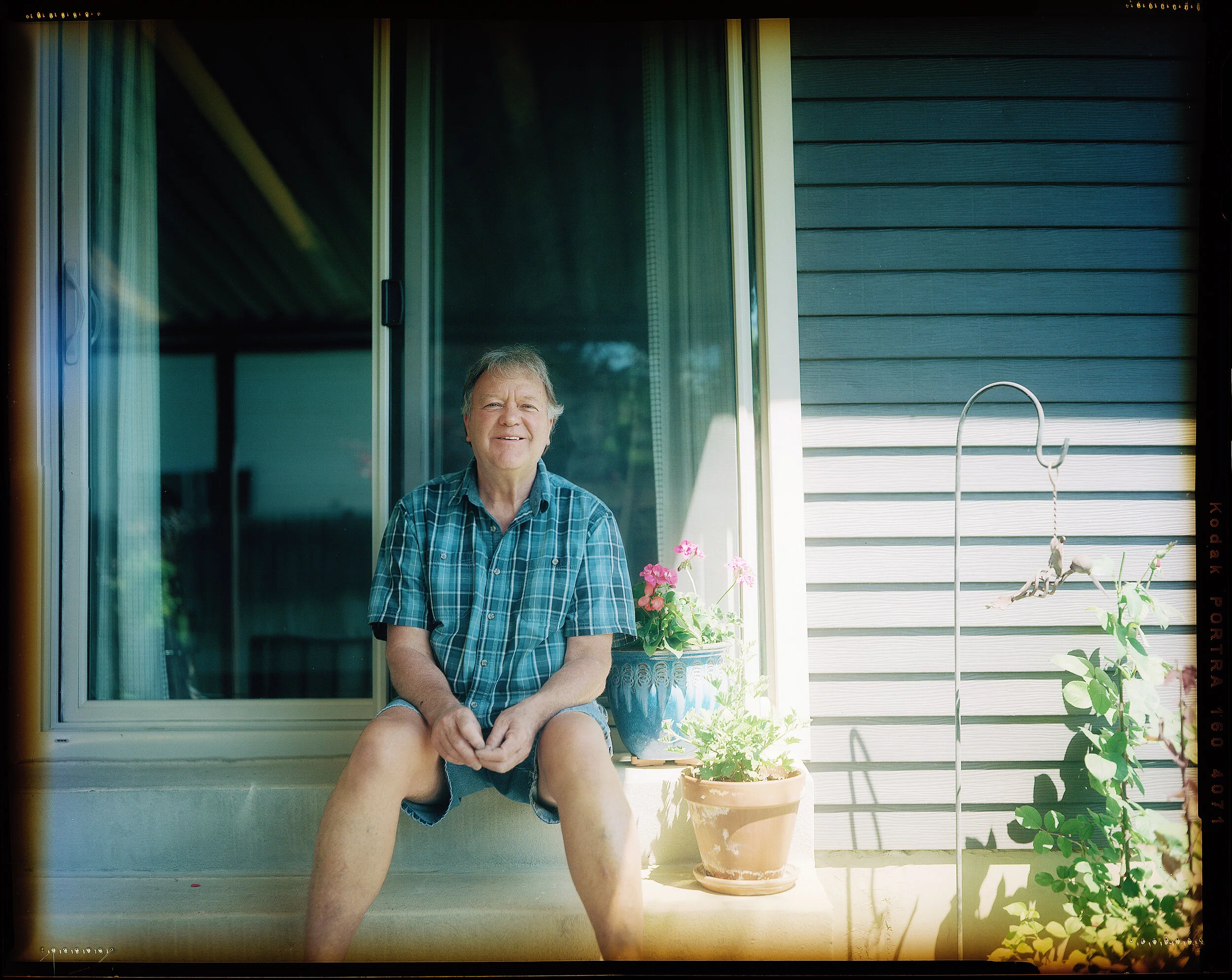
Images like the one above hurt the wallet and ego a bit. Between my dad’s confused expression and my blinking eyes, this moment is forever this way. Moments like this aren’t always bad tho. I’ll always prefer mid-reaction shots as I feel that the truest in humanity is revealed in them…but still, shots like this typically don’t end up anywhere other than a post like this.
In total, this shot cost me around $15. Yikes. But solid education and experience is forever priceless.
Speed Graphic + Zeiss Tessar 13,5cm 1:4,5
Heat-exhausted Kodak Portra 160
SCANNING THE NEG
Fortunately, I have invested into a Fuji Frontier SP3000 scanner and I am able to take total control of the scanning process and achieve fantastic color and sharpness with my negatives. The image of my dad above is my first attempt at scanning a 4x5 negative with the 645 mask. This was stitched together with 8 images but as you can see I missed scanning a few slivers of the negative.

Speed Graphic + Zeiss Tessar 13,5cm 1:4,5
IN CONCLUSION
It’s been a fun experience so far but I know I have a much longer way to go until I start to find results that I am able to showcase. The challenge with 4x5 is that researching large format systems feels like an entirely new language to me. I haven’t found as broad of a community offering as much info as the 35mm and 120 communities do—at least one who all can simultaneously agree on a select few lenses and bodies as the main go-to choice for shooting large format photography. Large format bodies and lenses along with their specs don’t make much sense to me at this point. This will probably be a multi-year quest to find the perfect match for me.
Thank you for sticking around through this post. I’d love to hear any recommendations or comments that you have regarding large format photography, or maybe some criticism on what I could have done better with the images above.
Until next time!
Trent
COVID-19 Quarantine Porch Portraits with Fujifilm GFX 50R and Pentax 6x7 Lenses
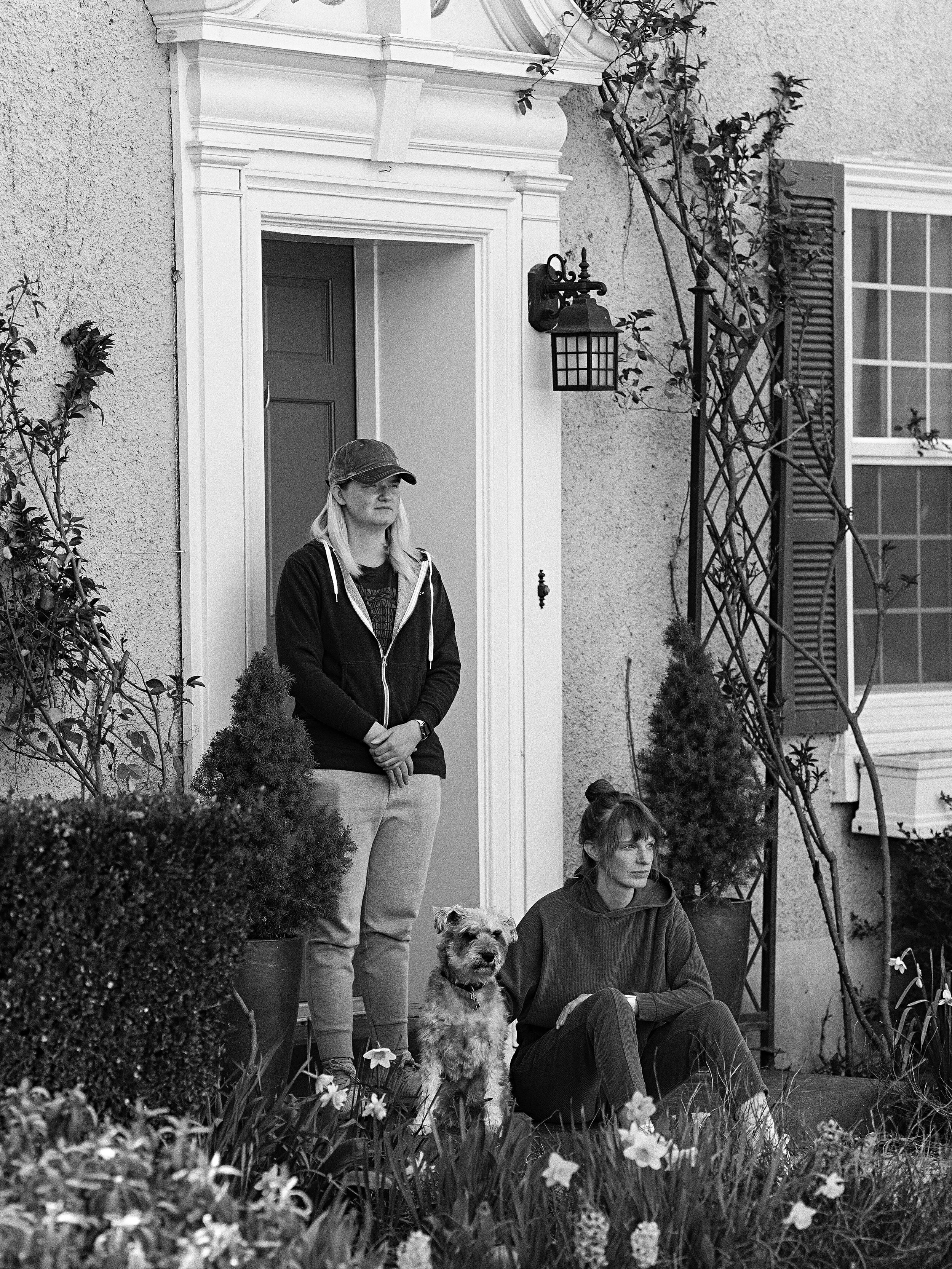
During week three of the social distancing quarantine here in Utah I decided to get out and photograph some of my closest friends and film industry partners. Of course I practiced safe social distancing by keeping myself a good distance from my subjects. Shot with the Fujifilm GFX 50R and my Pentax 6x7 lenses.

Quarantine Porchraits: The Faces of Utah Film
#TheFrontStepsProject
During the worldwide COVID-19 pandemic.
April - May, 2020.
During week three of the social distancing quarantine here in Utah I decided to get out and photograph some of my closest friends and film industry partners. Of course I practiced safe social distancing by keeping myself a good distance from my subjects.
Also, the Utah Film Commission were so kind to feature the images along with a few words from each of the subjects of this project. Check it out here: https://film.utah.gov/blog/porchraits/.
Benji Allred
DP
Tess & Babetta Kelly
Producers
Tess & Babetta Kelly
Producers
Tess & Babetta Kelly
Producers
For this project I decided to use the Fujifilm GFX 50R paired with my medium format Pentax 6x7 lenses, the 105mm F2.4 and the 200mm F4. These lenses do incredibly well and keep that same glassy look that I am familiar with when I use them on my Pentax 6x7 body.
Kelsie Moore
DP
Kelsie Moore
DP
Kelsie Moore
DP
The photos were taken throughout our conversations about the quarantine and how each of us is holding up during it. We discussed the stress and struggle with simple things such as grocery shopping, hand-washing, loneliness, cancelled jobs, etc. One silver lining that we all agreed on was that this quarantine offered us better contact with extended friends and family via group video chats and video gaming. Each session took anywhere from 10-20 minutes.
Cameron Gade
Director
Ryan Hannah
DP & Steadicam Operator
Ryan Hannah
DP & Steadicam Operator
Jon Tinsley
Gaffer
Jack Lott
Gaffer

Trevor Macdonald
DP
Val Hunter
Events Planner & Producer
Val Hunter
Events Planner & Producer
Val Hunter
Events Planner & Producer
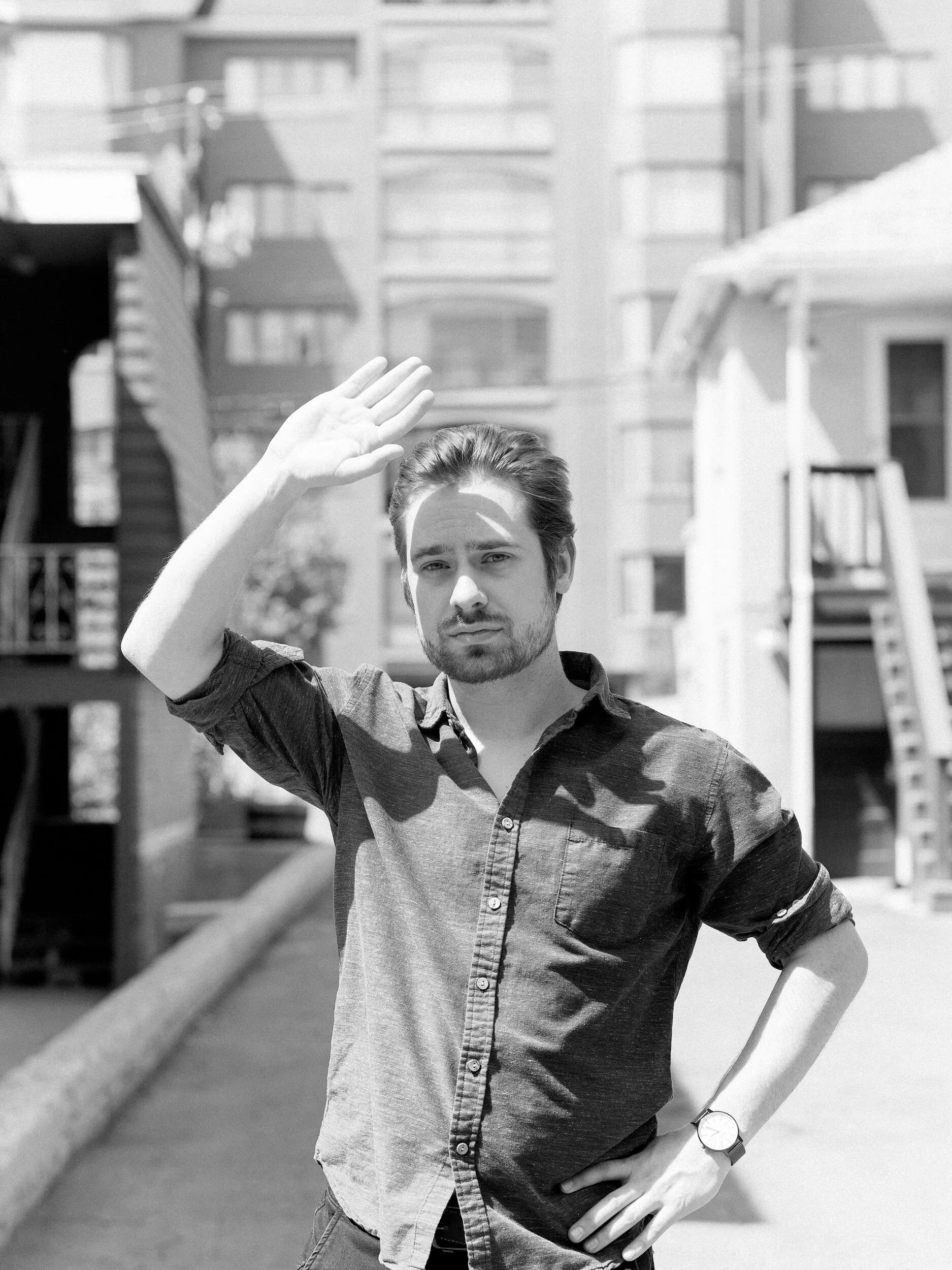
Mikkel Richardson
Cinematographer and AC

Mikkel Richardson
Cinematographer and AC

Meg Cabell
Set Decorator
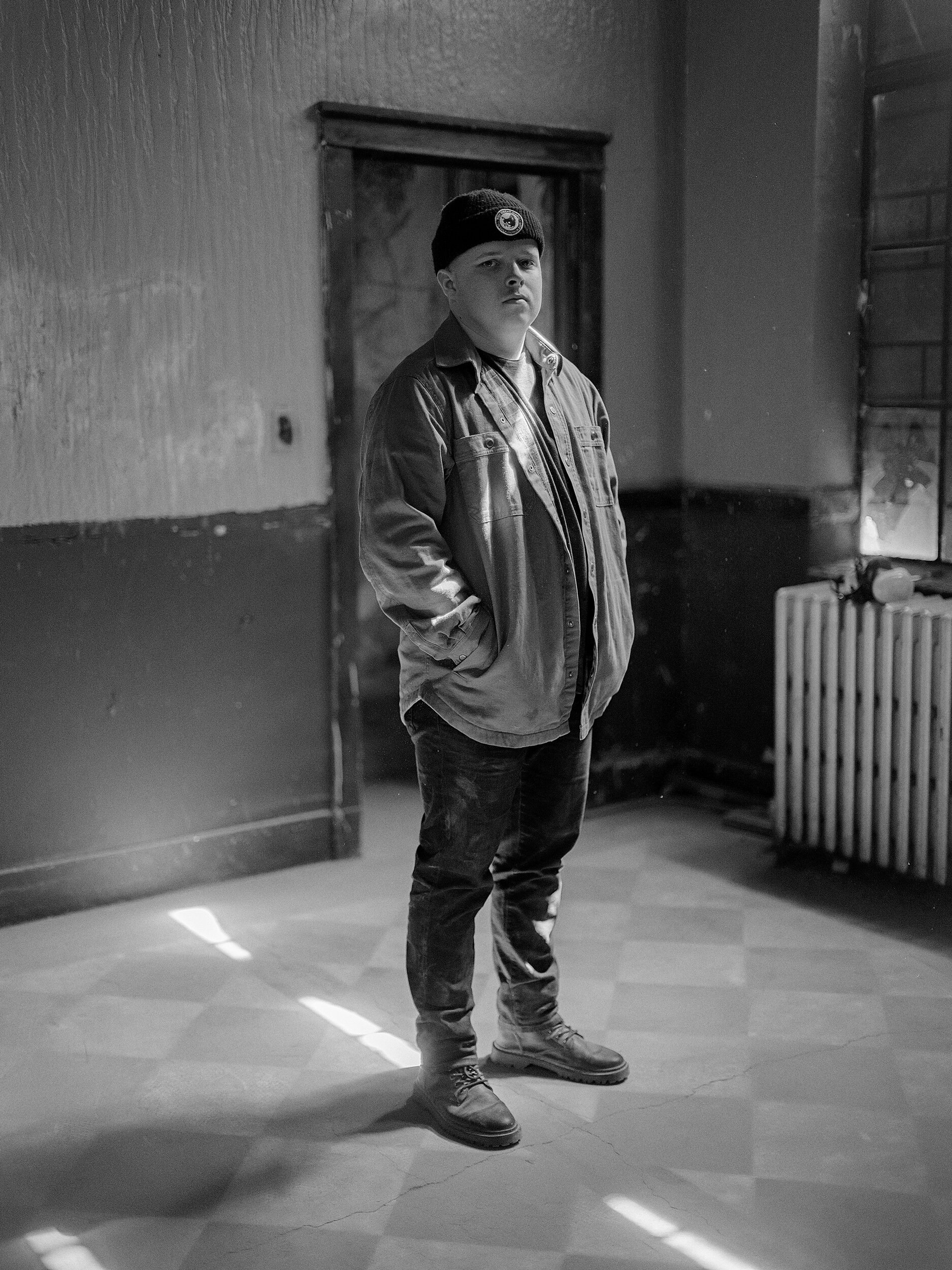
Dallin Corbin
Camera Assistant

Dallin Corbin
Camera Assistant
Search Posts
-
2018
- Mar 31, 2018 Contax T3 - Review
- Apr 20, 2018 Hexar AF - Review
- Sep 9, 2018 Olympus Stylus Epic vs Contax T3
-
2019
- Jan 9, 2019 Julbo Eyewear
- May 15, 2019 Pentax 6x7 MLU
- May 15, 2019 Fuji XT20 - Review
- Jun 15, 2019 London on Film
- Jul 22, 2019 Kodak Pro Image 100 Review! Now available in the USA!
- 2020